Three sessions. That’s how long it took to go from “let’s see if he even likes this” to the two of us leaving the water together on a 7-meter kite, with Aiden in front of me and both of us laughing. He’s five. This is the honest version of how we got there — what each session was actually for, what I was watching for, and where the fun came in.
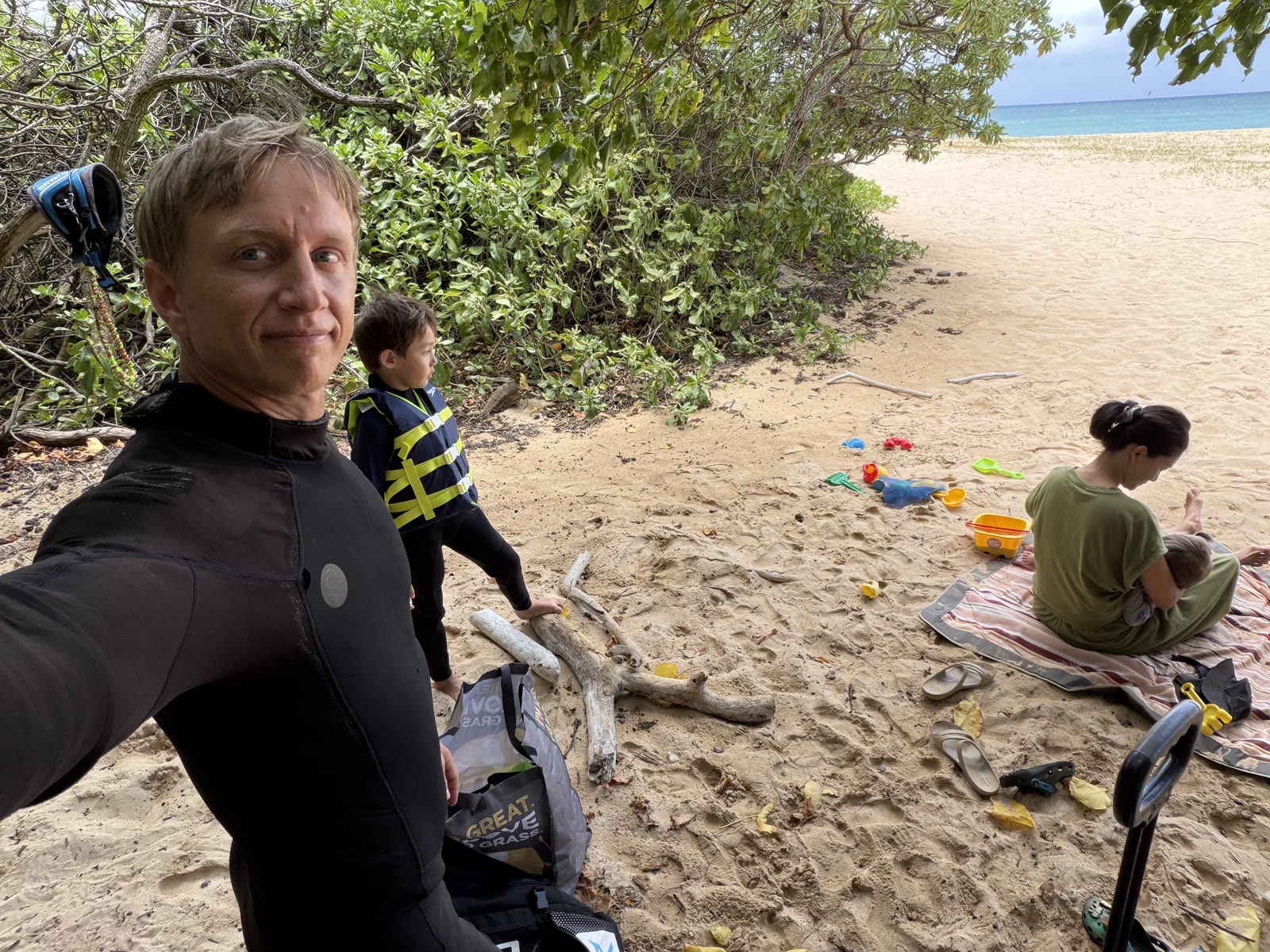
I would really like to take Aiden on the water kiting with me, show him big waves and have fun running away from them together.
My notes, the night before session one
Why I didn’t just put him on the board
I taught kiteboarding for years before Maui, and the thing every beginner wants to skip is the part that keeps you alive. Standing on a board is the last skill, not the first. Before that comes being comfortable in moving water with a kite pulling on you, and before that comes knowing you can get back to the beach without the board at all. With a five-year-old, I wasn’t going to skip any of it. So I broke it into three sessions with one goal each.
Session 1 — body dragging
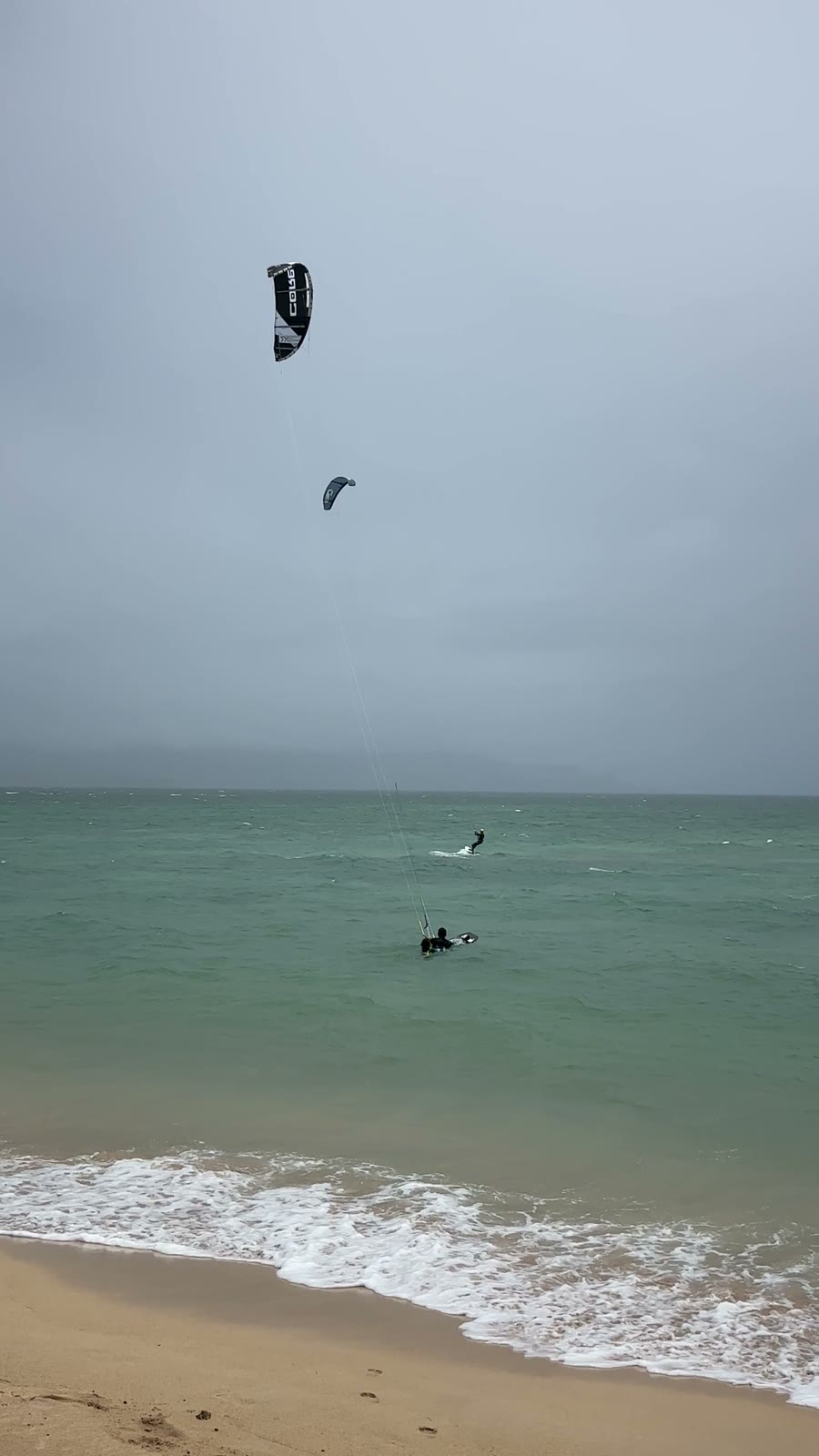
Body dragging is exactly what it sounds like: you let the kite pull you through the water with no board under you. Kiters learn it as a rescue skill — it’s how you get back to your board when you lose it, and how you get back to shore when things go wrong. For Aiden, it did two jobs at once. It taught him that the kite is just a steady pull and not something to fight, and it showed him he can be in real water, with waves, and be fine. He was holding on to me the whole time, life jacket on, and we stayed in close where I could stand up if I needed to.
It wasn’t all smooth. At one point a gust pulled harder than I expected, and for a moment he was floating in the water on his own while I got the kite under control. I picked him up within seconds — but that was the real lesson of the day, for both of us: the life jacket does its job. He floated, he was fine, and now he knows it.
My note from that evening: he really liked it and was already asking about next time. Ivy watched from the beach. Her review was “safe-ish.” I’ll take it.
Session 2 — riding
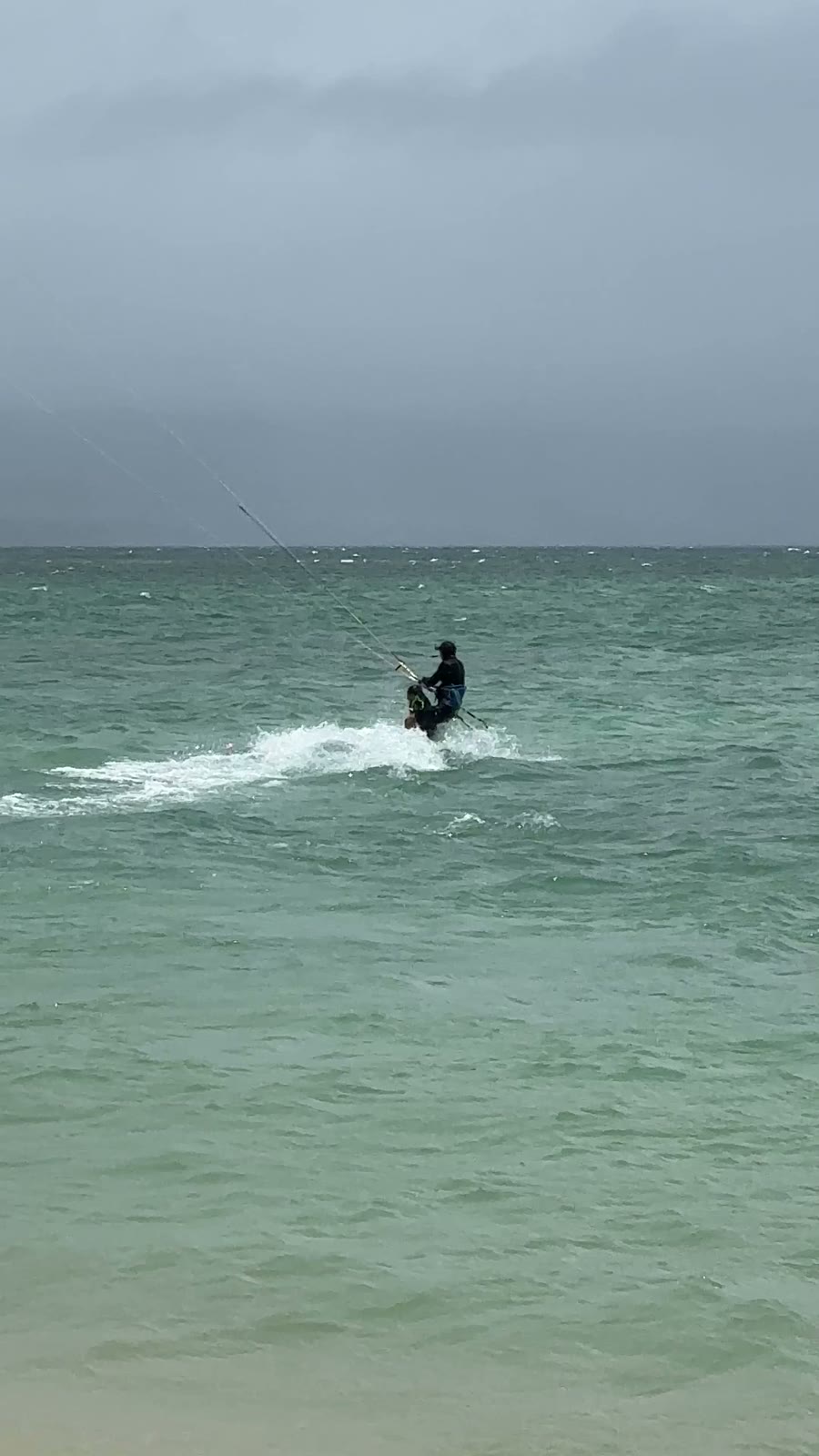
Session two was about one thing: finding a position he could actually hold. Where his feet go on the board, where his hands go on me, how he leans when I lean. That sounds small, but it’s the whole game — if he’s comfortable and locked in, I can ride normally, and if he’s not, nobody’s having fun. We started on a 5-meter kite and it was too light to pull both of us cleanly, so I swapped up to the 7 and that was the one. By the end he had a spot he liked and I could feel him relax into it.
Session 3 — have some fun
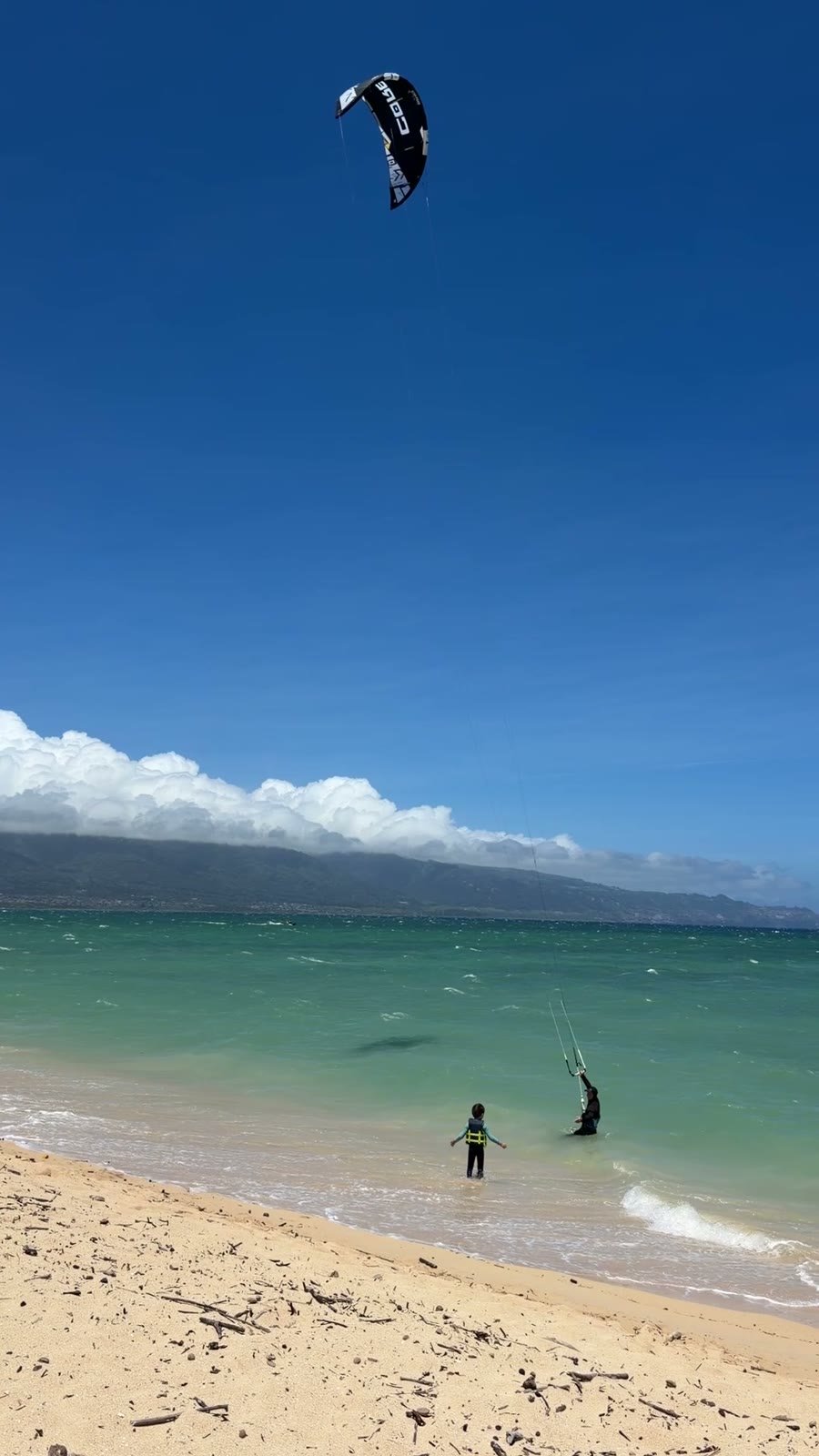
By the third session the groundwork was done, so the goal was simply to enjoy it. We went out twice that day. He was noticeably more settled than the first two times. We rode through some whitewater, popped off a couple of waves, and then, once I could feel he was solid, we went up.
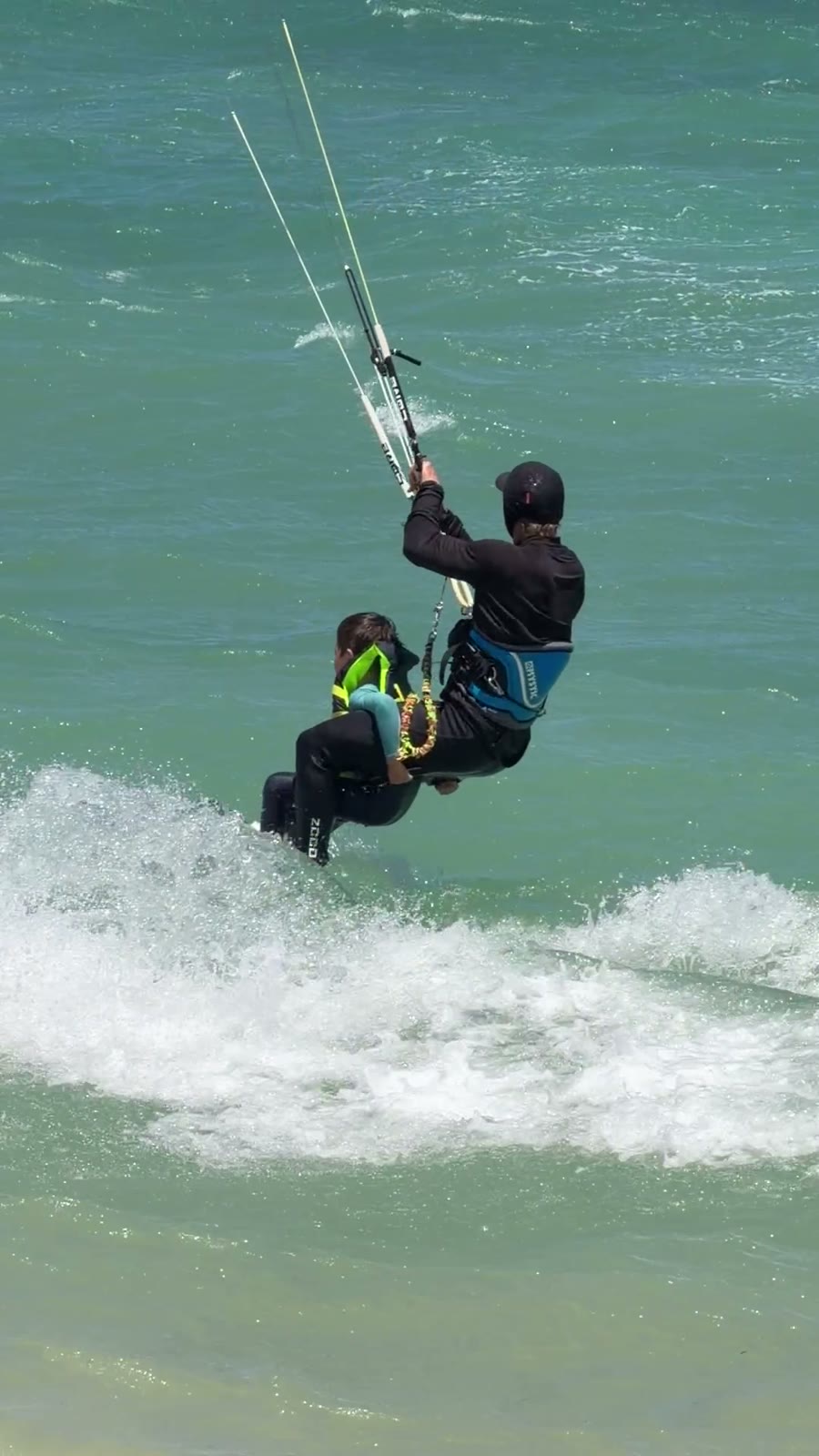
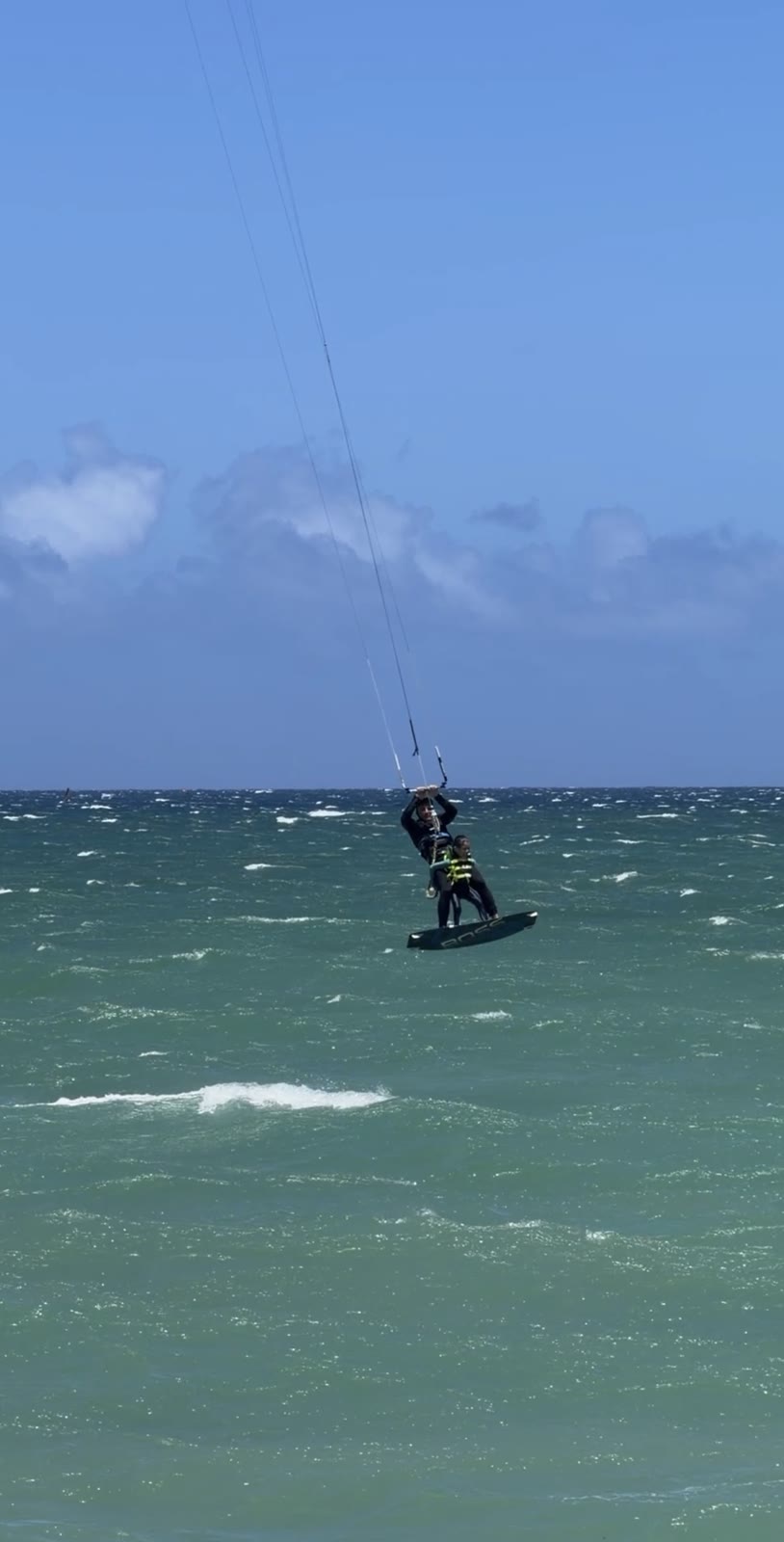
A proper jump this time — up, hang, down — not just a bounce off a wave. That was the “fun” part of the plan, and it landed exactly where I hoped.
What I’d tell another parent
- One goal per session. Body drag, then ride, then play. Don’t stack them. Each one is a full day’s worth of new for a small kid.
- Tell them the plan. If session one is “no board, just getting pulled,” say so up front — then nobody is disappointed when you don’t stand up.
- Go a size up. Two bodies need more kite than one. Our 5 was too light; the 7 was right for the same wind.
- Let them find the spot. The riding session was really about his position, not mine. Once he was comfortable, everything else got easy.
- Wax the top of the board. A kiteboard deck is slick and his feet are small. A layer of surf wax where he stands gives him grip, so he isn’t fighting to stay on while you ride.
- The jump is the reward, not the goal. It only happened because the first two sessions made it boring-safe.
The part I didn’t plan: these sessions are what make water time possible on loaded family days now. Aiden comes along instead of being the reason to skip. That might be the best outcome of the whole thing.
The three sessions in one minute
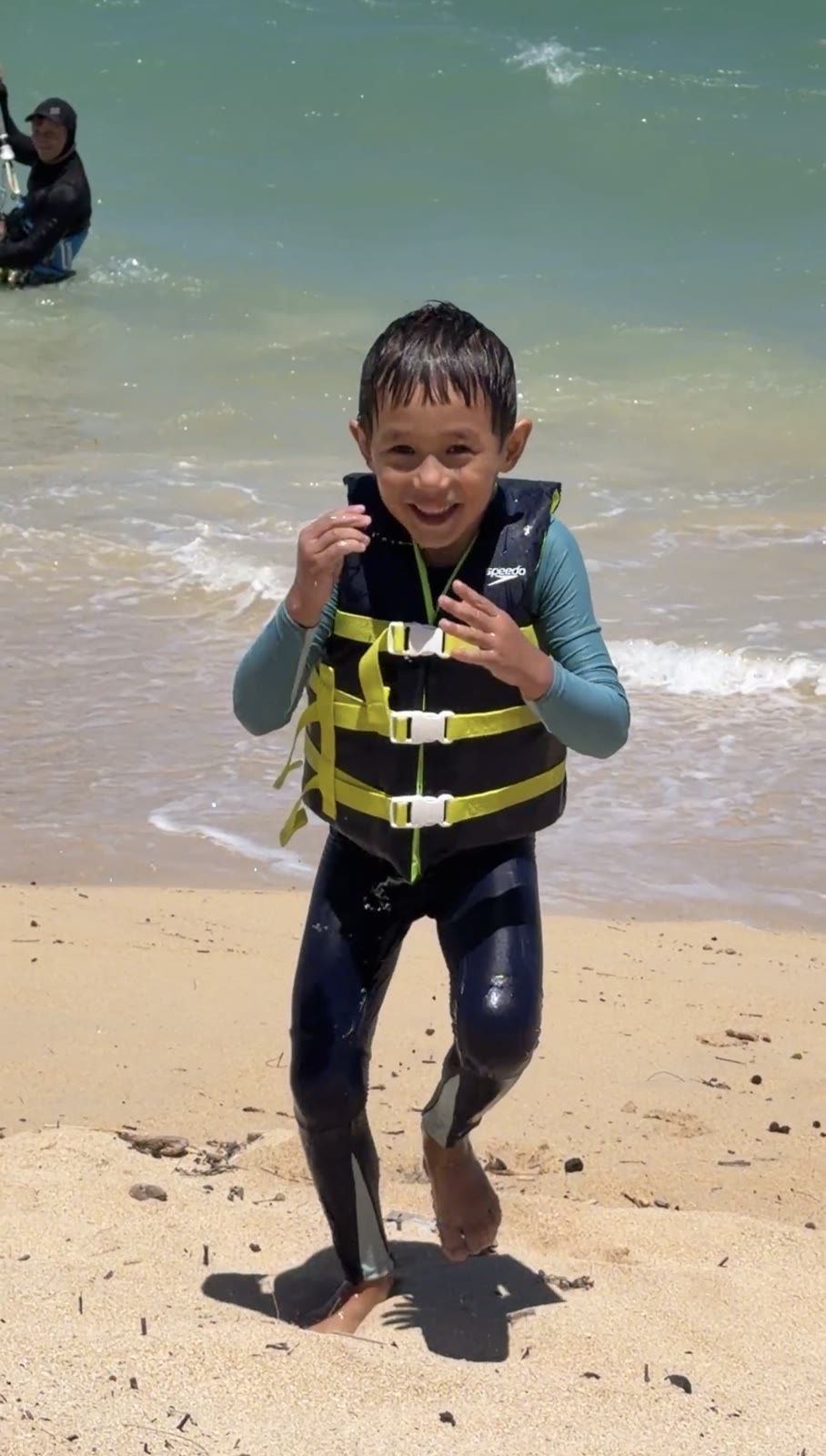
Body drag, ride, jump — and the walk out of the water at the end.